Study Abroad - Why Study at a UK University?
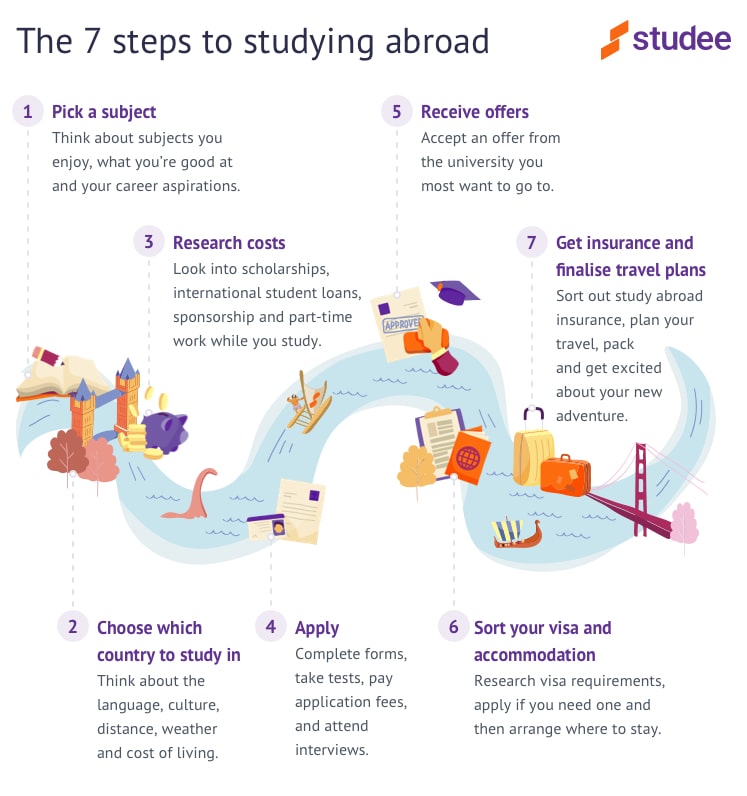
Can a quarter of a million of the world's smartest students be wrong? That's an estimate of the number of overseas students who are leaving the comforts of home and braving British food and forbidding the weather for many to obtain the postgraduate education they believe to be the key to bright futures in their home countries.
The British Council puts the total number of international students currently studying in the UK – at all academic levels – at almost one million, with two-fifths of the postgraduates coming from other countries. Increasing recognition by the UK government as a whole of the value of this phenomenon to the UK economy is likely to increase its efforts to draw these students away from competing institutions in other countries and to tackle the complex student visa laws that most foreign students cite as the biggest - and often the only - deterrent factor for seeking a university degree in the UK.
Studying in the UK, rather than at comparable universities and colleges in other countries, clearly remains the first choice for the largest segment of the international student population.
The main reason can be summed up in the one word 23-year-old Uzbek Tulkin Sultanov gave the BBC as a reason for studying in the UK: “reputation”. British universities are known around the world for their high academic standards, state-of-the-art educational facilities (particularly in science, engineering and the arts) and their wide range of offerings, combined with the flexibility to cater to students' individual needs.
Like many other students who eventually go to Britain themselves, Sultanov was educated at a British school in his homeland. As a result, he knew that British teaching was of high quality, that the professors at British universities were internationally regarded as leaders in their fields - and, crucially, that alumni of British universities enjoyed a degree of professional success upon returning to theirs Home that her generation envied.
British universities and colleges are continually assessed by professional bodies to ensure their teaching and research standards and their facilities are of the highest standard. The result was the more important assessment by the rest of the world, which at this point assumes that every UK postgraduate education is top rated. Knowing that standards are high at all levels, a Master's or PhD degree from a UK university enjoys unrivaled prestige.
Of the half million Chinese students who study abroad each year, around 50,000 have chosen the UK as their preferred academic destination and collectively spend an estimated £550m a year on their education in the UK. Lin Disheng, 22, a Chinese student featured in another BBC story, followed his BS degree from Nottingham University (where he earned top honors in e-commerce and digital business) with a master's degree at Oxford. Citing China's rapid industrialization and economic growth, he told the BBC: "Chinese young people like me want to contribute to this rapid process. That's why I want to study in the UK - to learn better Western technologies and to experience Western culture and do my best."
It goes without saying that the students admitted to British universities are the best students from the best universities in their home countries. Still, for most, what augments the education they receive at home can be summed up in the three words independence, creativity, and confidence. These aren't just traits they acquire on a personal level — although the mere process of adapting to and then succeeding in a culture that is often markedly different from their own gives them a level of confidence they may not even have need in their home countries.
More specifically, a UK graduate education teaches foreign students a type of independent thinking, creativity with ideas (most noticeable in artistic disciplines, but just as obvious in disciplines like economics and politics – “thinking outside the box” – and even in science. Most international students come from academic environments where the focus is on memorizing and, with the best of intentions, dutifully regurgitating the lecturers’ own ideas to their professors: only in an environment that both encourages and teaches independent thinking will students learn as if they were their own ideas generate, propose and test original solutions to problems and trust their own creative impulses.
British universities also offer recognized value for money. For example, bachelor's degrees are typically three years instead of four, and most master's degrees are designed to be completed in one year. This makes them very cost effective compared to the longer time it takes to complete comparable degree programs in other countries, particularly the US. In addition, scholarships and other forms of financial support enable many international students to enter institutions that they would not be able to attend on their own or with family resources. Personal assistance in accessing such aid, overseen by highly qualified university administration staff, helps many international students navigate the maze of qualifications that sometimes prevents them from accessing this important source of financial aid.
Additionally, access to government-funded healthcare contributes significantly to the financial benefits of studying in the UK. Students studying full-time in Scotland and studying full-time for at least six months in England, Wales or Northern Ireland are entitled to free medical treatment from the British National Health Service.
Another benefit of studying in the UK is that some students can work while they study if they need or want to. Coming from outside the EU, students enrolled in a program for more than six months can work up to 20 hours a week during term time and full-time during school holidays. Students who need to supplement their finances to live and study abroad will be happy to know that part-time work is easy to find. Others may find part-time work a valuable opportunity to learn more about the local culture outside of academic confines.
The UK also offers a unique variety of graduate academic settings. In addition to the universities and colleges in Britain's bustling, dynamic cities - encompassing far more locations than London, although the capital is unrivaled for its academic, cultural and other offerings - students can choose to study on purpose-built rural campuses . often also in areas of unique natural beauty. Whilst some overseas students understandably want the programs and prestige of Britain's famous, time-honored colleges, others prefer the more modern, cutting-edge universities that have sprung up across the country, sometimes with specific academic specialisations, sometimes offering a full range of postgraduate programmes.
In fact, exposure to the larger culture is one of the strongest reasons for choosing the UK as a place to pursue an advanced degree, although it is often overlooked when considering where to study abroad. Exploring the country beyond the university campus strengthens English skills and, more importantly, does not require learning another language alongside the international language, English, which has become the global academic norm.
In addition to native, local and popular cultures, Britain offers some of the richest examples of Western culture to be found anywhere in Europe - and not just in London. Although London plays second fiddle to no other city in Europe in terms of its cultural offerings of all kinds, there are also major cultural centers and events in other British cities such as Birmingham, which has one of the largest symphony orchestras in the world, and Edinburgh, a city with an extraordinarily rich year-round cultural life and a summer festival of all the arts that is among the most prestigious in the world. British museums are also among the best in the world.
For the adventurous, the rest of Europe is literally on the doorstep of people living in Britain. There are affordable ways to travel to the rest of Europe - especially for students - resulting in close and easy access to a wide range of other Western cultures, people and traditions.
But even students who find study so challenging that it keeps them close to home and leaves little time for travel will be grateful to be 'constrained' to a country as famously beautiful as Britain. Britain's countryside, villages and beaches are renowned around the world for their stunning beauty. Travel within the country is inexpensive and quick, giving most visiting students ample opportunity to explore the riches of Britain outside the university walls.
Whatever your reasons for studying in the UK - and whatever you are doing to enhance your academic experience there - you can be sure of one thing. When you return home, everyone will be impressed that you received your degree in a country that is world-renowned for the quality of its educational offerings. And with a British degree in your pocket (and brain) you'll be in a prime position to compete for your country's best jobs - and find the most satisfying way of participating in a globalized world you've encountered yourself.
scholarships uk
Leave a Reply